
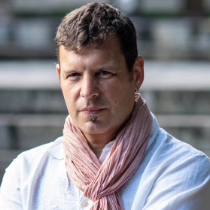
Dr. Miles Neale is a psychotherapist, teacher of Tibetan Buddhism, and author with twenty-five years of experience integrating science and spirituality.
MOREJoin Dr. Miles Neale on a sacred pilgrimage through mystical Japan. Walk the temples of Kyoto, the monastic paths of Mount Koya, and the ancient Kumano Kodo trails in a transformative journey of mindfulness and spiritual depth.
What if walking became a contemplative practice, and travel became a rite of passage for clearing the mind and reorienting the soul? This rare pilgrimage through Japan’s mystical heartlands is not a tour, but a carefully curated initiation into presence, silence, beauty, and transformation. Over thirteen days, you’ll walk mindfully through three iconic regions—Kyoto, Mount Kōya, and the Kumano Kodo—encountering three living wisdom traditions: Zen Buddhism, Shingon Tantra, and Shugendō mountain shamanism. Guided by Dr. Miles Neale, a psychologist, author, and teacher of Tibetan Buddhism known for integrating Eastern wisdom with depth psychology, this journey invites you to unplug from distraction, enter sacred landscapes, refine perception, and recover the contemplative dimension of life. READ MORE
Dr. Miles Neale is a psychotherapist, teacher of Tibetan Buddhism, and author with twenty-five years of experience integrating science and spirituality.
MORE


Tour Description
Rather than moving quickly from landmark to landmark, this journey asks us to meet Japan through practice: slowly, deliberately, and with the whole body. Temple courtyards, raked gravel gardens, incense-filled halls, mountain paths, village inns, and forest shrines become more than beautiful settings; they become mirrors for the psyche, thresholds of transformation, and invitations into presence.
The experience is intentionally immersive and simple: mindful walking, shared meals, ritual practice, teachings in place, and time for reflection. As the journey unfolds, Japan’s sacred landscapes begin to work on us from within—quieting habitual distractions, awakening perception, and opening a deeper dialogue with nature, silence, and the soul.

Along the way, we encounter living lineages that continue to shape Japan’s spiritual landscape: Kyoto’s Zen tradition, including time with a representative of the Rinzai lineage; Mount Kōya, the Shingon tantric enclave founded by Master Kūkai; and the mist-veiled cedar forests and syncretic Shugendō shrines of the Kumano Kodo. These are not simply historic sites, but active gateways into practice, ritual, and embodied wisdom.
You’ll travel as pilgrims do, staying in traditional shukubō temple lodgings and family-run inns, immersed in the rhythms of sacred life. Each location is carefully chosen to support contemplative practice, self-reflection, and awe before Japan’s celebrated aesthetic of simplicity, refinement, and transience.

Mornings begin with seated meditation. Days unfold through walking visits to temples, shrines, forests, and sacred sites, where chanting, ritual, on-site teachings, and guided reflection reveal the liberative insights of Buddhist philosophy and embodied practice. Meals range from shōjin ryōri—seasonal vegetarian temple cuisine prepared with humility and restraint—to kaiseki, a multi-course meal expressing precision, balance, and reverence for the seasons. Both reflect Japan’s devotion to mindful living and the quiet beauty of impermanence.

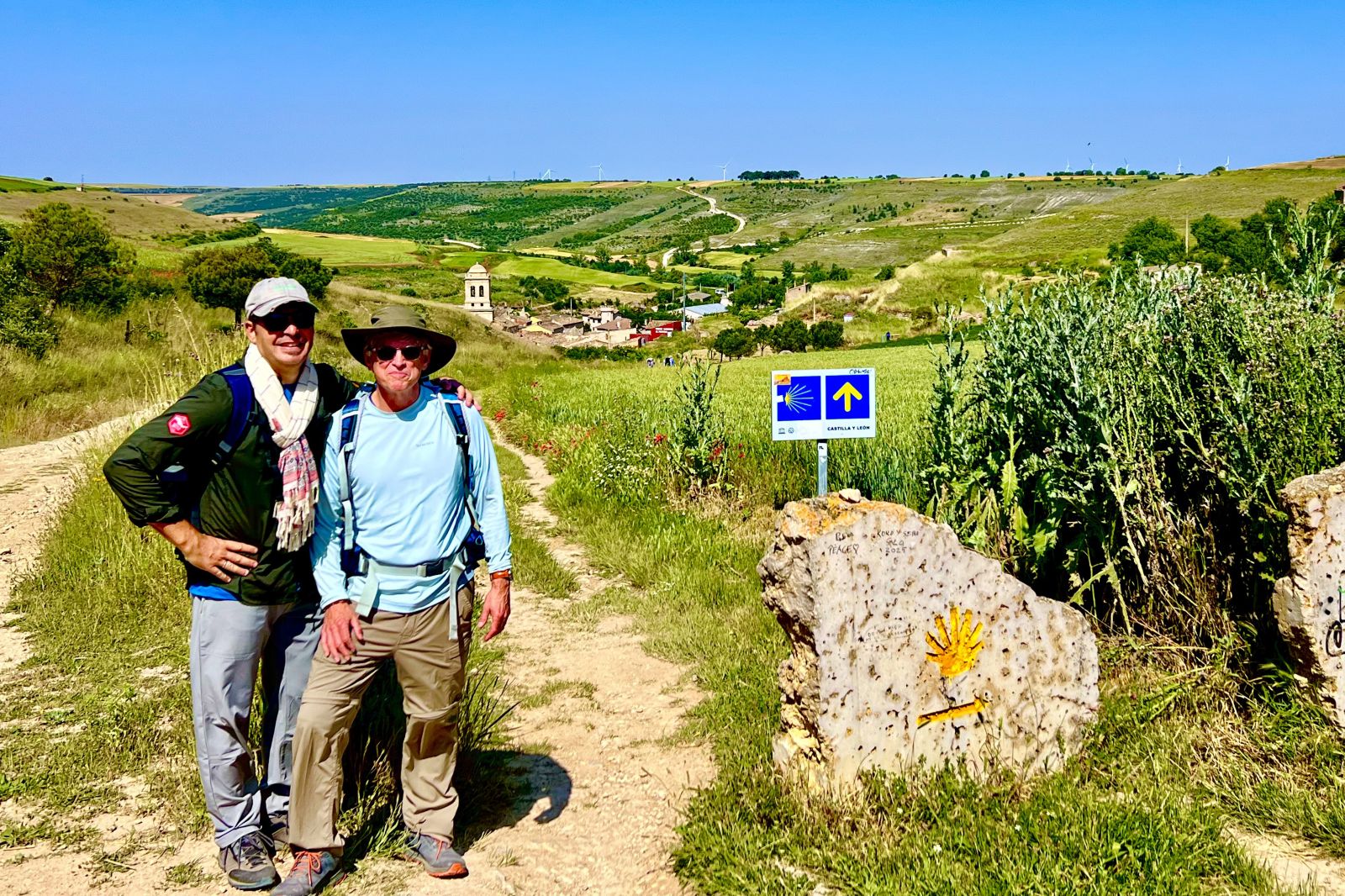
Midway through the journey, we begin walking the sacred Kumano Kodo trail, entering the forested heart of the Kii Peninsula and one of Japan’s most revered pilgrimage landscapes. As the sister path to Spain’s Camino de Santiago, the Kumano Kodo forms part of a rare global lineage of sacred walking; here in Japan, however, the path draws us inward through forest, ritual, contemplation, and the clearing of the mind.

Through daily walk ’n talk sessions—a reflective method developed by psychologist and author Dr. Miles Neale—you’ll process inner material, explore dreams, work with emotional patterns, engage intuition, and integrate insights that arise while walking through sacred landscapes. The trail becomes a container for contemplative inquiry, karmic purification, soul dialogue, and transformation.
As Miles often says, “It’s not the destination but the journey that transforms us.” These conversations, set within dramatic landscapes and ancient temples, draw upon his two decades of experience integrating Tibetan Buddhism, depth psychology, pilgrimage, and contemplative practice. They return us to what is deeply human: walking slowly, inhabiting the body, communing with nature, listening inwardly, sharing honestly, and answering the soul’s call to adventure into the great mystery.

On the Kumano, we’ll venture into enchanted forests, pray at ancient shrines, and participate in elemental purification rituals. Following the spirit of Shugendō mountain practice, we’ll learn to encounter nature not as scenery, but as sacred presence. Our journey in this region includes the Three Grand Shrines of Kumano—the Kumano Sanzan—culminating at the iconic Nachi Falls, a thundering cascade revered as the descent of spirit into the world. There, we’ll pause to reflect, release, and ritually prepare to return to our lives with renewed clarity and purpose.
This pilgrimage to Japan integrates movement and stillness, ancient tradition and modern psychology, solitude and community, temples and forests. It is not an escape from the world, but a crucible of self-transformation for those ready to re-enchant it.

Important Considerations: Fitness, Accommodations, Transfers, Meals, and Pilgrimage Readiness
This pilgrimage combines urban walking in Japan’s great cultural centers with several days of forest trekking along the sacred Kumano Kodo trails. In Kyoto and Kōya-san, we will walk 3–4 hours daily on city streets and temple grounds at an easy pace. On the Kumano Kodo, the terrain varies from gentle paths to more demanding ascents and descents through cedar forests, ridgelines, stone stairways, and exposed tree roots. Distances range from 4–13 km (2.5–8 miles) per day, with elevation gains and losses between 120–400 m (400–1,300 ft). Walking times average 3–6 hours depending on the stage, including breaks, meditation, and meals. The most challenging day involves a 13 km ridge walk with uneven surfaces and exposed roots (difficulty rating 4/5), while other days are shorter, gentler village or shrine approaches (ratings 1–2/5).
Overall, participants should be prepared for moderate physical activity, with one or two demanding hikes balanced by many easier walks. A reasonable level of fitness means being comfortable walking several hours on consecutive days, managing uneven terrain and stair climbs, and enjoying the rhythm of steady pilgrimage travel. Hiking poles, supportive shoes, rain gear, and light daypacks are recommended.
This is not a luxury tour, and we make no claims to five-star accommodations. That’s by design.
We’ve intentionally selected pilgrims’ guesthouses, temple lodgings, and mountain inns that are simple and comfortable—but more importantly, they reflect the ethos of this journey: humility, contemplation, and community.
Several of our accommodations are traditional temple guesthouses, where simplicity and communal living are part of the experience. Rooms may be separated by traditional paper screens, walls may be thin, and the atmosphere is quiet and contemplative. Futon mattresses on tatami mats, communal bathing, shared bathroom facilities in some locations, and simple traditional spaces invite us into a different rhythm—one that values spaciousness over privacy, and presence over convenience.
In Kyoto, we spend three nights at Daishin-in, a 15th-century Zen temple guesthouse within the Myōshin-ji temple complex, and in Kōya-san, we spend two nights at Daien-in temple. These stays are not merely accommodations; they are part of the pilgrimage itself.
When we arrive at each guesthouse, we will be responsible for offloading and transporting our own luggage to our rooms. Please pack accordingly. We’ll work together as a team to streamline these transitions—offering help when needed, moving with care and awareness.
Meals are also part of the pilgrimage experience. We are fortunate to encounter a variety of carefully prepared Japanese cuisine, including shōjin ryōri—simple vegetarian temple food rooted in the Zen monastic tradition—as well as kaiseki, a refined multi-course meal that expresses seasonality, balance, and beauty. Participants are encouraged to approach meals with openness, gratitude, and curiosity. In traditional Japanese settings, it is respectful to try what is offered, avoid unnecessary waste, and refrain from requesting changes unless medically necessary or arranged in advance. As we move farther from major cities, Western options and independent meal choices become more limited, so flexibility around food is an important part of the journey.
Communal bathing may also be part of the experience. In Japan, onsen and shared baths are traditional practices associated with purification, relaxation, and respect for the body. Bathing is done nude and is understood as nonsexual, quiet, and contemplative. Guests are expected to wash thoroughly before entering the bath, keep towels and soap out of the soaking pools, and maintain a peaceful atmosphere. If you have visible tattoos, please be discreet, as some traditional bathing facilities may ask that tattoos be covered or may have specific policies.
This pilgrimage also includes meditation, group discussion, reflective exercises, and guided walk ’n talk inquiry. No prior meditation experience is required, but participants should come prepared to engage inwardly and relationally—with sincerity, discretion, and respect for the group container. Small discomforts—unfamiliar food, shared spaces, long walks, communal bathing, or cultural differences—can become part of the practice, helping us meet ourselves with patience, humility, and good humor.
There will be no white-glove service here. But there will be quiet mornings, shared meals, temple bells, forest paths, and the subtle satisfaction of living simply and mindfully—just as countless pilgrims before us have done. This too is part of the practice.

You can find detailed information about the hiking requirements for each day in the day-by-day itinerary, and enjoy more stunning photos from a past pilgrimage to Japan with Miles on our Flickr page.
Dual Pilgrimage
The Kumano Kodo in Japan and the Camino de Santiago in Spain are the only two UNESCO-World Heritage recognized pilgrimage trail networks on the planet. Offered through Sacred Earth Journeys as a rare, paired opportunity, they invite us to cultivate what Dr. Miles Neale calls the pilgrim’s mindset: the capacity to transform challenges into the elixirs of humility, resilience, and creativity at a pivotal time of global instability and transition.
Walk one, or both, in the same year or over time. Each journey stands complete. Together, they offer a living apprenticeship in how to cultivate the pilgrim’s mindset to meet uncertainty with wisdom, difficulty with courage, and the challenges of our changing world with an open heart.
Those who complete both the Kumano Kodo and Spain’s Camino de Santiago will qualify for Dual Pilgrim recognition, honoring the connection between these two ancient routes of transformation. Pilgrims who complete one sacred path may carry that recognition forward, should they choose to complete the sister route in the future.
Join us on our next Camino Pilgrimage, Walk of Compassion: Camino de Santiago Pilgrimage with Dr. Miles Neale, May 15 - 28, 2027
Arrive in Osaka, where our local representative will greet you and assist with a short 5–10 minute transfer to our nearby airport hotel. Take the day to rest and recover from your journey. In the evening, we’ll gather and walk for a welcome dinner and open the circle with introductions.
Osaka, once the economic heart of Japan, served for centuries as a vibrant maritime hub. It was a key threshold city—where monks, traders, and diplomats arrived from the Asian mainland before continuing inland toward Kyoto and the sacred mountains. It is a fitting entry point for our pilgrimage, as we too prepare to shift from the outer world into an inner journey.
(Overnight in Osaka at Stargate Hotel or similar)

We transfer from Osaka to Kyoto, pausing en route at Manpuku-ji, the head temple of the Ōbaku school of Zen, founded by Ingen Ryuki in the 17th century. There, we experience a formal tea ceremony—Japan’s quintessential expression of kata, the sacred principle of precision and meditative form. Every gesture is deliberate, every movement an offering. It is a perfect doorway into Japan’s culture of kata—the disciplined repetition of form, whether through tea, calligraphy, or martial arts—where precision and presence become a path of inner refinement.
Arriving in Kyoto, we check into the Daishin-in, a meticulously preserved 15th-century sub-temple within the Myōshin-ji complex, now welcoming pilgrims as a traditional Zen guesthouse. With its polished wood floors, tatami mat rooms, and tranquil rock garden, Daishin-in captures the essence of the pilgrim’s spirit. It will serve as our base for meals, group activities, and morning meditations while in Kyoto.
Guests in single rooms will stay at the nearby Machiya House, a restored traditional home with a small interior tsuboniwa garden—a quiet courtyard designed for light, air, and contemplation—alongside modern amenities. A shuttle service will be provided to and from group activities.
In the evening, we gather for an orientation and a teaching session with Miles.
(Overnight in Kyoto at Daishin-in, Machiya House or similar)

After morning meditation, we embark on our first walking tour of Kyoto’s Zen landmarks. We begin within the Myōshin-ji temple complex, a sprawling monastic refuge that remains an active center of Zen training. From there, we continue to Ryōan-ji, home to Japan’s most famous dry garden—fifteen stones set in raked white gravel, inviting deep contemplation on the nature of emptiness and tranquility.
Our final stop is Ninna-ji, a UNESCO World Heritage site that blends imperial history with Shingon esoteric practice. Known for its late-blooming cherry blossoms and elegant five-story pagoda, Ninna-ji evokes the quiet beauty at the heart of Japanese aesthetics.
The afternoon is free to enjoy lunch of your choice and explore Kyoto city. In the evening, we return to Daishin-in for a Dharma talk by a Zen master.
(Overnight in Kyoto at Daishin-in, Machiya House or similar)

We leave behind the austere refinement of Kyoto and journey up to Mount Koya—Japan’s tantric heartland. Founded by Kūkai (Kōbō Daishi) in 816 CE, Koya is a monastic sanctuary of over one hundred temples nestled on a forested plateau. It is here that the esoteric teachings of Shingon Buddhism took root, marrying the personal with the cosmic, the human with the divine.
After checking into our pilgrim’s inn, we explore Kongōbu-ji, the head temple of the Shingon school, and Danjo Garan, Kūkai’s original monastic compound. Miles offers an onsite teaching to bridge the gap between Zen and Tantric Buddhism—how we move from formless beauty to mandalas filled with deities and vibration. We then continue to the quaint Koya village, where you may choose your own lunch and soak in the energy of this memorable place.
(Overnight in Koya at Shukubo Temple Daien-in Guesthouse or similar)

We begin the day with morning meditation, attuning to the subtle body before setting out on one of the most spiritually charged walks of the pilgrimage—the sacred approach to Okunoin, in the heart of Mount Koya.
Mount Koya, or Kōyasan, is the mountain monastic enclave established in 816 CE by Kūkai (Kōbō Daishi), the great tantric master who returned from China with esoteric Buddhist transmissions and founded the Shingon school. He envisioned this remote, forested plateau as a living mandala—a cosmic mirror for inner realization, where every temple, hall, and stupa corresponds to a sacred element of awakened mind.
Our walk through Okunoin Cemetery is a descent into mythic time. Beneath towering cryptomeria trees lie more than 200,000 tombstones and memorials—samurai, poets, emperors, and commoners—each drawn to rest near the mausoleum of Kūkai. It is believed he never died, but remains in eternal meditation, a beacon of compassion for all sentient beings.
After lunch and free time in the village, we return for a rare five-senses meditation led by a female Shingon master, offering an embodied experience of tantric transmission through the gateways of touch, scent, sound, sight, and taste.
We close the day with an integration session led by Miles, processing our experiences and insights within the Koya mandala.
(Overnight in Koyasan at Shukubo Temple Daien-in Guesthouse or similar)

We descend from Mount Koya into the deep green embrace of the Kii Peninsula, a sacred geography older than Buddhism itself. Here, the mountains speak the language of animism—where waterfalls are spirits, rocks are altars, and the forest itself is an oracle.
The Kumano Kodo, a network of pilgrimage routes threading through the Kii Peninsula, has been walked by emperors and ascetics for over a millennium. It is a landscape of myth and memory, where religious boundaries dissolve and the wildness of nature becomes a crucible for spiritual rebirth.
We begin walking from Gyuba-dōji, named after the legendary image of Emperor Kazan, who renounced court life and entered these mountains on a horse and ox yoked together—a gesture of humility and surrender, marking the beginning of the inward path.
Our walk takes us through towering cedar groves to Tsugizakura-oji, one of the oji shrines lining the Kumano Kodo. These waystations were once sites of ritual offering, places where pilgrims paused to commune with local deities and reaffirm their vows.
Along the trail, Miles offers an outdoor teaching session, grounding the symbolism of our descent into the forest as a mythic stage of transformation.
We break for a bento picnic lunch in nature, then continue on foot to our inn. Many of these traditional inns offer onsen bathing—mineral-rich hot springs long revered in Japan for their healing and purifying properties.
We close the day with an evening discussion and integration session with Miles.
(Overnight in Kumano at Kawayu Onsen Midoriya or similar)

The sacred threshold known as Hosshinmon-oji, or “Gate of the Awakening of Faith,” marked the point where ancient pilgrims ritually prepared themselves before entering the spiritual heart of Kumano. This gate was not merely symbolic. It initiated the final passage from outer journey to inner vow: the Bodhisattva ideal of awakened compassion offered for the benefit of the world.
We begin here with a contemplative walk along the forested trail leading to Kumano Hongū Taisha, the grand shrine at the center of Kumano’s triune sacred system.
Hongū Taisha is the first of the Three Grand Shrines of Kumano (Kumano Sanzan) we will visit and has drawn seekers from every level of society for more than a thousand years. Originally built on a river delta, the shrine was relocated after a flood to a quiet rise surrounded by cypress trees. Its towering torii gate remains one of the largest in Japan.
This shrine, like others in Kumano, blends Shinto and Buddhist cosmologies, reflecting Japan’s unique syncretic spirit. The deities here are considered manifestations of celestial Buddhas and Bodhisattvas—guardians of healing, compassion, and blissful wisdom.
At the shrine, Miles offers an on-site teaching session. After lunch in the village of Hongū, we return to the inn. The day concludes with an evening discussion and integration session led by Miles.
(Overnight in Kumano at Kawayu Onsen Midoriya or similar)

Today we undertake the Kogumotori-goe trail, one of the most visually striking and evocative sections of the Kumano Kodo. This rugged path winds through steep inclines and high ridgelines, revealing sweeping views of layered mountain peaks. Beneath our feet, cedar roots form tangled pathways; above us, the canopy filters sun and wind into a mythic kaleidoscope.
Historically, this route was used by imperial pilgrims as part of their arduous journey into Kumano. But its deeper power lies in its capacity to draw out the unconscious. The forest becomes a mirror. The terrain becomes a teacher.
During a midday pause, Miles leads a session on shadow work, guiding pilgrims to meet the unintegrated aspects of psyche that surface when we leave behind the comfort of identity and step fully into the unknown.
After our bento lunch, we return to the inn to soak, rest, and reflect. The day concludes with an evening session with Miles, deepening the alchemical work of integrating what we have encountered—in the wilds, within and without.
(Overnight in Seiryu-so Onsen Hotel or similar)

We travel deep into the Kumano mountains for a rare three-day training immersion with an authentic Shugendō master. Shugendō is Japan’s indigenous path of mountain asceticism, blending tantric Buddhism, Shinto animism, and shamanic inner alchemy.
After a ceremonial opening, we embark on a four-hour forest immersion designed to awaken our elemental connection to nature and loosen attachment to ego. This training invites physical endurance and flexibility of character. In this tradition, the mountain is both teacher and temple. We share a traditional lunch at the ashram and return for chanting and discussion rooted in the Shugendō lineage.
The day ends with a group integration session led by Miles.
(Overnight in Seiryu-so Onsen Hotel or similar)

Today we return to the ashram for further Shugendō training with the master. In the morning, we participate in a waterfall purification ritual known as misogi. Standing beneath cold, rushing water, we practice dissolving ego, releasing preferences, facing fear, and enduring karmic residue without reacting, opening a glimpse into the natural state of primordial clarity.
After lunch and rest, we reconvene for a final elemental discussion on practice, then return to the inn for dinner, reflection, and an evening integration session with Miles.
(Overnight in Seiryu-so Onsen Hotel or similar)

Our final initiation in the Shugendō lineage culminates with a dramatic goma fire ritual. This symbolic act of burning through obstacles channels the power of purification and transformation. Flames rise from a central hearth amid chanting and intense drumming, burning away karmic obstacles while seeding our intention for renewed life.
In the afternoon, we visit Hayatama Taisha, the second of the Three Grand Shrines of Kumano on our route, nestled near the mouth of the Kumano River. After a substantial lunch in Shingū, we return to the inn and close the day with an evening integration session led by Miles.
(Overnight in Shingu City at Hotel New Palace or similar)

We make our final sacred walk to Seiganto-ji and Nachi Taisha, the third of the Three Grand Shrines of Kumano (Kumano Sanzan), perched beside Japan’s tallest waterfall. The thundering waters of Nachi Falls are revered in both Shinto and Buddhist cosmologies as a symbol of divine descent—spirit flowing into human form.
Here, we hold a closing ritual, reflecting on the full arc of our heroic journey: departure, descent, transformation, and return; from ego, through shadow, to divinity incarnate.
After free time in the nearby village, we gather one final time for a celebratory farewell dinner, savoring and sharing the depth of our transformation.
(Overnight in Shingu City at Hotel New Palace or similar)

After breakfast, we journey along the coastal road back to Osaka airport, pausing for those eligible to receive the celebrated Dual Pilgrim Certificate—an emblem of completion for both the Three Grand Shrines of Kumano and the Camino de Santiago. Those who have not yet walked the Camino will maintain their stamped pilgrim’s passports, marking the completion of the Three Grand Shrines of Kumano alone and planting the aspiration to complete Spain in the future.
The bus ride and airport transition become a liminal space for reflection: looking back on a remarkable journey, metabolizing challenges and breakthroughs, and looking ahead to integrating insights and sharing gifts back home. Return flights or onward travel can be arranged from Kansai International Airport.
(B = Breakfast; L = Lunch; D = Dinner)
Note: This itinerary is subject to change due to conditions beyond our control.
