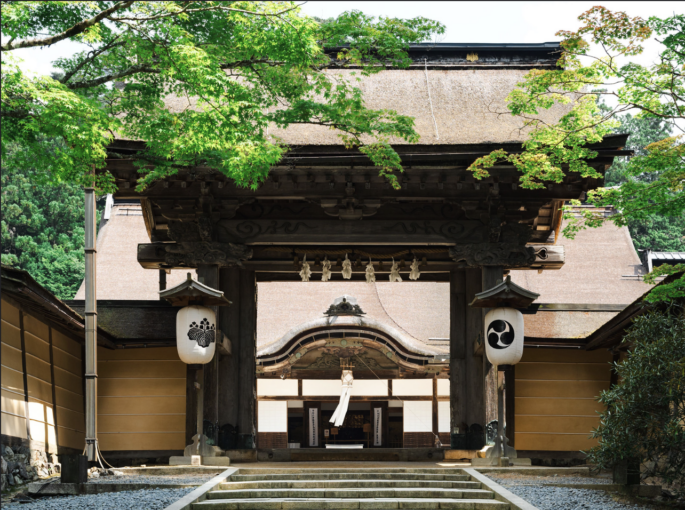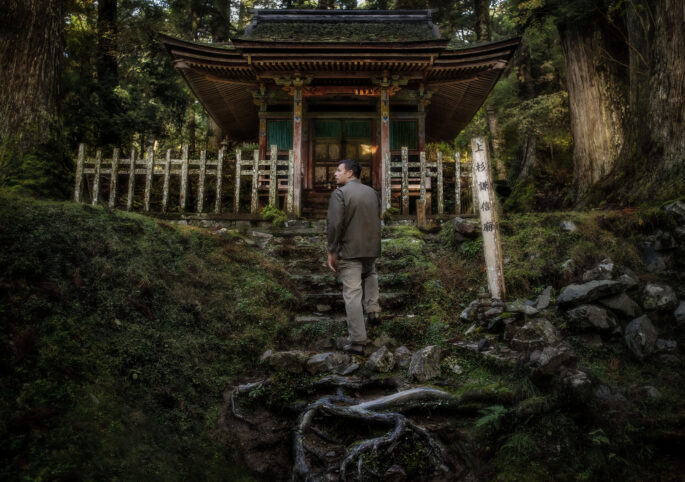
To journey through Japan is not simply to move through space, but to enter a living conversation between nature, ritual, and awakening. Across centuries, seekers, monks, and pilgrims have traveled Japan’s sacred pathways not to escape the world, but to meet it more fully. Zen, Shingon Tantra, and Shugendō each offer distinct doorways into this encounter — and together they form a spiritual geography that continues to guide those who walk with intention.
Sacred Earth Journeys will host a pilgrimage through these living traditions, Pilgrimage Through Mystical Japan with Dr. Miles Neale: A Sacred Journey from Kyoto Temples to Kumano Kodo Trails, October 13 – 25, 2026, led by Buddhist psychotherapist and scholar Dr. Miles Neale.
Miles has recorded a short video here, in which he shares what makes this journey with us so unique! Neale reflects on the power of walking pilgrimage, the depth of Japan’s spiritual lineages, and the way this journey is held as a liminal space—offering time, support, and structure for inner listening, renewal, and clarity as one moves toward what is next.
What follows is an exploration of the sacred landscapes themselves and how we can connect with them.
Kyoto: Zen, Stillness, and the Art of Presence
Once the imperial capital of Japan for over a thousand years, Kyoto is the spiritual heart of Zen Buddhism. Here, temples were not built to impress the eye, but to train the mind.
Zen teaches that awakening is not something to be attained, it is something to be remembered. This philosophy is embodied in Kyoto’s rock gardens (karesansui), where carefully raked gravel and placed stones represent oceans, mountains, and emptiness itself. These gardens are meditative texts written in silence, inviting the observer to slow down enough to truly see.
Tea ceremonies, another Zen art perfected in Kyoto, transform a simple act into a sacred ritual, reminding us that mindfulness is not separate from daily life. Each movement, each breath, becomes an offering of presence.
In a world driven by speed and distraction, Kyoto offers a counter-teaching: that simplicity, stillness, and attention are themselves forms of devotion.
Mount Kōya: Shingon Buddhism and the Fire of Transformation
Rising into cedar forests and mist, Mount Kōya (Kōyasan) is the spiritual center of Shingon Buddhism, an esoteric tantric tradition founded in the 9th century by the monk Kūkai (Kōbō Daishi).
Shingon Buddhism teaches that enlightenment is not distant, it is available here and now through the body, breath, sound, and ritual. The mountain itself is designed as a living mandala, with temples positioned to mirror cosmic principles.
One of the most powerful practices within Shingon is the Goma fire ritual, where sacred flames consume wooden prayer sticks inscribed with intentions. Fire becomes a teacher – transforming obstacles, attachments, and illusions into clarity and insight.
To step onto Mount Kōya is to feel that spirituality is not abstract. It is visceral, embodied, and alive. A reminder that transformation often requires courage, surrender, and heat.
The Kumano Kodo: Shugendō and the Pilgrim’s Path & A Return to Nature
If Kyoto refines the mind and Mount Kōya ignites the spirit, the Kumano Kodo pilgrimage trails return the seeker to the body and the Earth.
For over a thousand years, these forested paths have been walked by emperors, ascetics, and mystics practicing Shugendō. A spiritual tradition that blends Shinto animism, Buddhism, and mountain asceticism.
Shugendō teaches that nature itself is the scripture. Waterfalls purify. Mountains initiate. Forests speak.
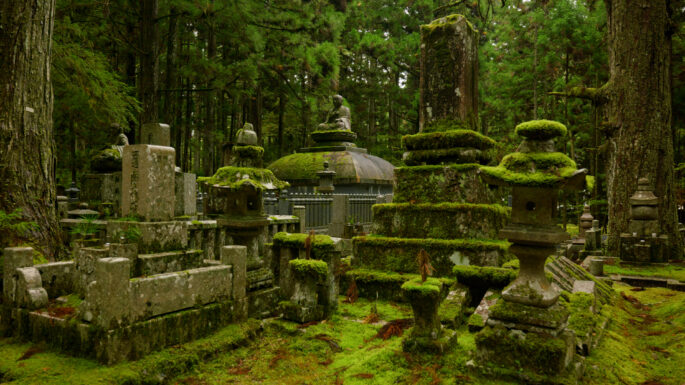
Pilgrims walk through moss-covered trails, past ancient shrines, and into remote landscapes where silence is broken only by birdsong and falling water. Practices include immersion in waterfalls, prayer with the elements, and direct communion with the living world.
Here, spirituality is not something studied it is something endured, embodied, and earned through presence with ancient wisdom that runs through the land.
An Invitation to Walk the Path
This journey is not just about collecting experiences, it is about remembering how to walk, how to listen, and how to live with intention.
For those who feel called to step into a deeper relationship with themselves, with tradition, and with the living Earth, this pilgrimage through mystical Japan is an invitation.
The path is ancient. The teaching is alive.
And the journey begins with a single, intentional step. Few spots remain, inquire today!