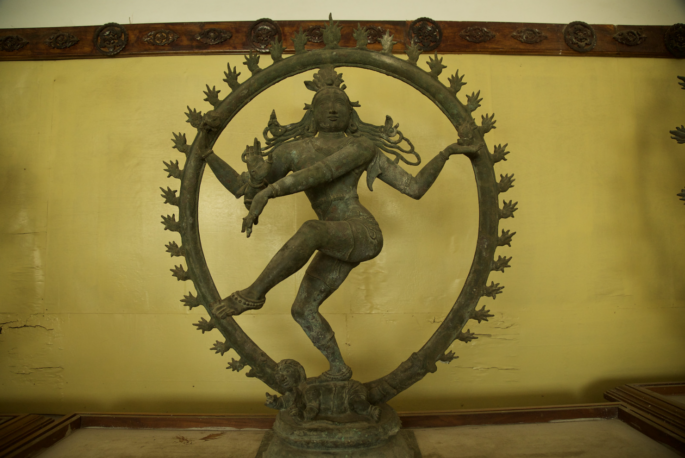
One of the most powerful spiritual images in the world is Shiva as Nataraja the Lord of the Cosmic Dance. In this iconic form, Shiva dances within a circle of flame. One hand beats the drum of creation, another holds the fire of dissolution. One foot crushes the demon of ignorance, while the other lifts in liberation. This is the universe in motion. Creation. Destruction. Transformation. Awakening. Andrew Harvey often describes this dance as the deepest symbol of spiritual evolution: “The dance of Shiva reveals that the universe itself is an act of sacred transformation.”
Few places on Earth embody this vision more powerfully than the Chidambaram Nataraja Temple, one of the most revered temples dedicated to Shiva as the Cosmic Dancer. For over a thousand years, pilgrims have traveled to Chidambaram to witness this sacred mystery. According to legend, Shiva performed his ecstatic Ananda Tandava, the Dance of Bliss-here before ancient sages in a forest grove. At the heart of the temple lies a profound teaching known as the Chidambaram Secret: behind the curtain of the sanctum is empty space, symbolizing the ultimate truth that the divine essence of the universe is pure consciousness.
Sacred Stones by the Sea: Mahabalipuram
Along the coastline of the Bay of Bengal lies the ancient temple complex of Shore Temple, part of the sacred city of Mahabalipuram. Built by the Pallava kings in the 8th century, the Shore Temple rises dramatically against the ocean winds, its stone towers facing the horizon like a silent prayer offered to the cosmos. This coastal sanctuary was once part of a legendary series of temples sailors called the Seven Pagodas, a sacred maritime landmark believed to have guided travelers across the seas.
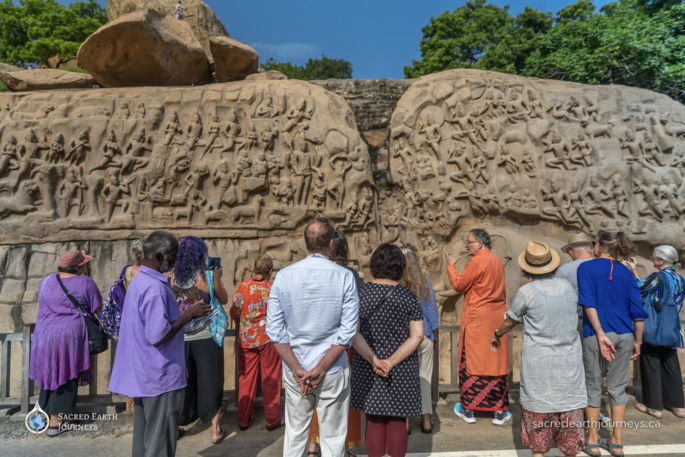
Nearby, immense rock carvings depict cosmic myths such as the Descent of the Ganges, reminding pilgrims that these sacred sites were never merely architectural feats. They were spiritual teachings carved directly into the body of the earth. Standing among these stones, one begins to sense the deeper truth the ancients understood: temples are not only places of worship, they are energetic vessels designed to awaken consciousness.
The Chola Temples and the Architecture of the Divine
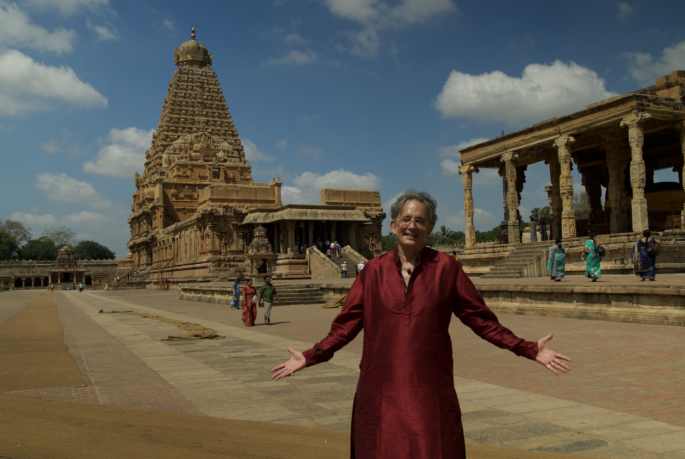
Further inland stands one of India’s greatest sacred monuments: the Brihadeeswarar Temple in Thanjavur. Constructed in the 11th century by the mighty Chola dynasty, this towering temple was dedicated to Shiva as the supreme cosmic power. Rising more than 60 meters into the sky, its massive granite tower represents Mount Meru, the mythic axis of the universe. Every wall, column, and sculpture vibrates with sacred geometry and symbolic meaning. Dancers, gods, celestial beings, and guardians are carved into the stone as if the entire temple itself were participating in Shiva’s cosmic dance. For devotees, entering such a temple is not simply visiting a historic monument, it is entering a field of living spiritual energy cultivated through centuries of ritual, prayer, and devotion.
Arunachala: The Living Mountain of Shiva
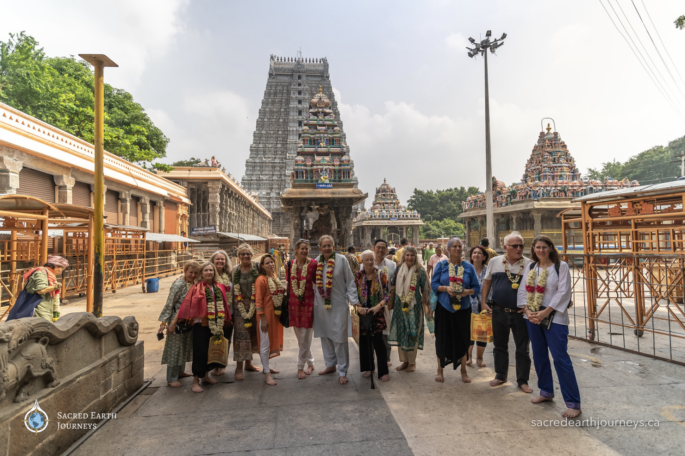
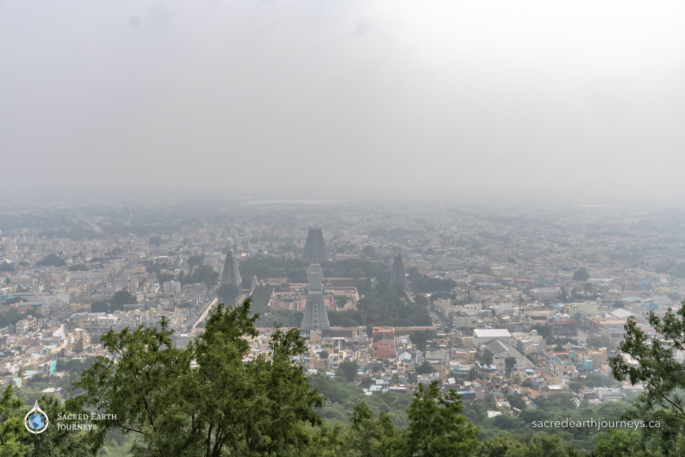
Some of the most powerful manifestations of Shiva are not temples built by human hands, but living landscapes. One of the holiest of these is Arunachala, the fiery mountain rising above the sacred town of Tiruvannamalai. For millennia, this mountain has been revered as Shiva himself in the form of divine fire. At its base stands the vast Arunachaleswarar Temple, one of the largest temple complexes in India. Pilgrims walk a sacred path around the mountain in a ritual known as girivalam, believing the act dissolves ego and awakens spiritual clarity. The great sage Ramana Maharshi lived here for decades, teaching that Arunachala was the ultimate guru.
He wrote simply: “Arunachala is the Self itself.” To walk these lands is to encounter a rare stillness, a presence that seems to invite the mind to quiet and the heart to open.
Sacred Wisdom and Living Traditions
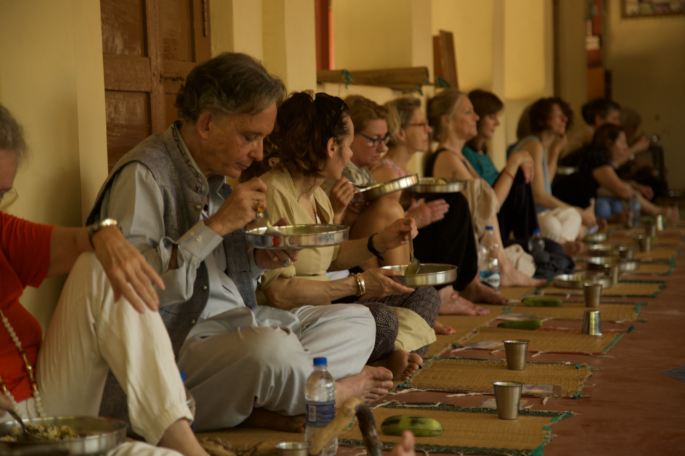
South India has also long been a meeting ground for spiritual seekers, visionaries, and a place we journey on sacred pilgrimage in Pondicherry – where the teachings of philosopher-mystic Sri Aurobindo continue to inspire the evolution of consciousness. Nearby, the experimental community of Auroville was founded as a living experiment in human unity and spiritual transformation. Further along this sacred path lies Shantivanam Ashram, a contemplative ashram where the Christian monk Bede Griffiths spent decades exploring the meeting point of Eastern and Western spiritual traditions. Together, these places reveal that India’s sacred landscape is not only ancient, it is continuously evolving, welcoming new seekers into its timeless wisdom.
Living the Dance of Shiva
The deeper meaning of Shiva’s dance is not merely philosophical – it is profoundly personal.
To awaken to Shiva, is to allow the sacred fire of transformation to move through our lives. It is
the courage to let go of illusion, to dissolve what no longer serves, and to participate consciously in the ongoing creation of a more compassionate world. Andrew Harvey often reminds seekers that the true dance of Shiva happens not only in temples, but in the human heart. “The divine dance is happening everywhere, in the stars, in the earth, and within our own awakening.”
A Journey into Shiva’s Sacred Landscape
For those who feel drawn to explore this mystery more deeply, we will be offering a profound
pilgrimage through the sacred landscapes of South India led by Andrew Harvey.
Together we will walk ancient temple grounds, encounter living spiritual traditions, and experience the powerful landscapes where Shiva’s presence has been honored for centuries. For many pilgrims, these journeys are not simply travel, they are invitations into deep transformation. If the mystery of Shiva and the sacred power of South India speaks to you, we invite you to come explore the Sacred Sites of Shiva with us in person, on our next upcoming journey, learn more and join us today!