Long before maps divided nations, before borders were drawn across the Earth, there were places that people journeyed to simply because they were sacred.
Not sacred because a religion declared them so.
Sacred because something in the landscape itself seemed to invite communion between heaven and earth.
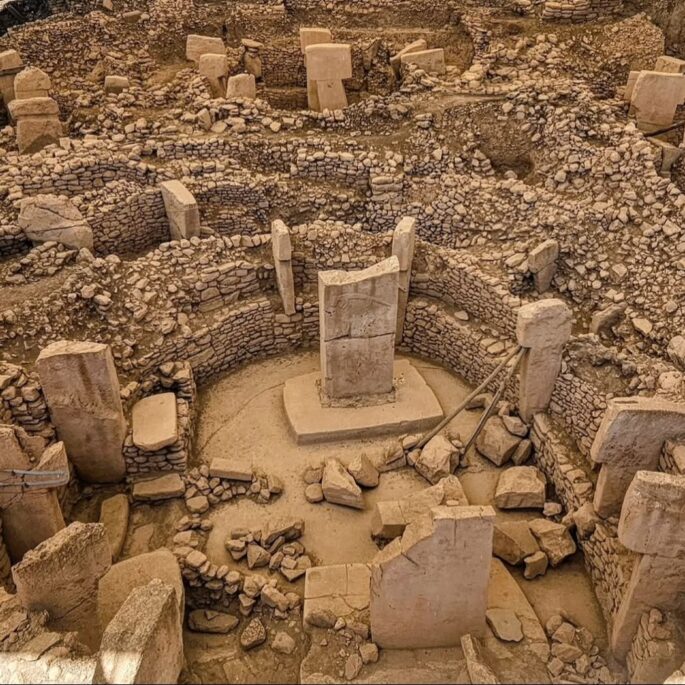
Göbekli Tepe is one of those places.
Rising gently from the hills of southeastern Türkiye, this extraordinary sanctuary has quietly become one of the most significant archaeological discoveries of our time. Its towering limestone pillars, intricately carved with animals and symbolic forms, have prompted historians, archaeologists, mystics, and spiritual seekers alike to reconsider not only the origins of civilization but the role of the sacred within it.
For many, the fascination with Göbekli Tepe begins with questions of chronology.
How old is it?
Who built it?
What civilization gave rise to such astonishing craftsmanship?
These are important questions, and they continue to shape archaeological research.
Yet perhaps they are not the deepest questions this place invites us to ask.
Mystic and scholar Andrew Harvey has spent his life guiding pilgrims to the world’s great sacred sites, reminding us that pilgrimage is never simply about visiting ancient places, it is about allowing ancient places to awaken something divine within us.
From this perspective, Göbekli Tepe ceases to be merely an archaeological discovery.
It becomes a living invitation.
Not simply to understand history…
…but to remember our relationship with the sacred.
The Earth Was the First Temple
One of the great gifts of researcher and author Freddy Silva has been to shift the conversation surrounding ancient monuments away from the question of when they were built and toward the far more compelling question of why.
Across decades of research documented in books such as The Divine Blueprint and The Missing Lands, Silva proposes that humanity’s greatest sacred sites were never placed randomly upon the Earth.
Whether in Peru, Egypt, India, Cambodia, Malta, or Türkiye, ancient builders demonstrated an extraordinary sensitivity to landscape. They consistently chose locations where mountains, underground water, geological formations, celestial alignments, and natural energies converged.
To Silva, temples are not simply places of worship.
They are instruments of transformation.
Their geometry, orientation, acoustics, symbolism, and relationship to the surrounding landscape were designed to create coherence between the human being and the living Earth.
This perspective transforms the way we encounter Göbekli Tepe.
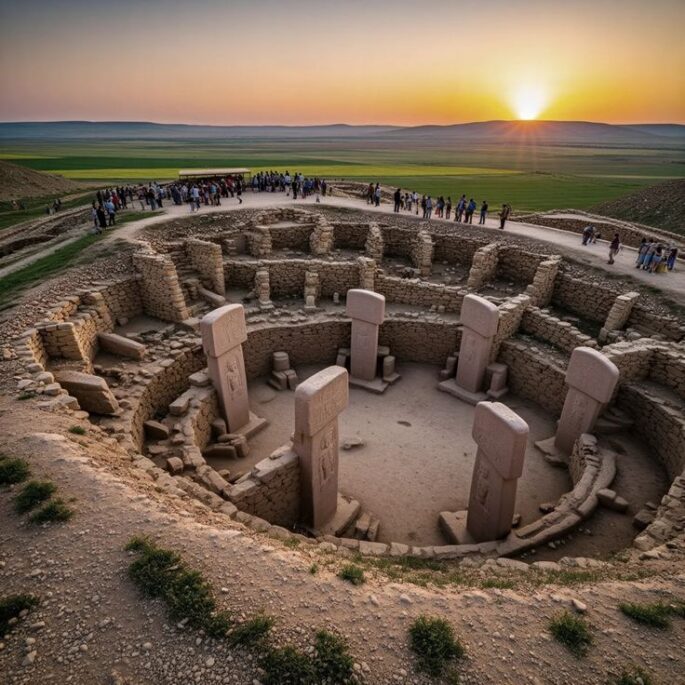
Its carefully arranged circular enclosures no longer appear as primitive architecture.
They begin to resemble a carefully orchestrated ceremonial landscape, one designed not merely to be seen, but to be experienced.
Perhaps this is why so many people describe feeling an unusual stillness when they stand among its ancient mysterious pillars.
The stones seem less like ruins…
…and more like participants in an ancient conversation.
Architecture as a Language of Consciousness
Modern culture often thinks of temples as buildings.
Ancient cultures understood them differently.
For civilizations across the world, sacred architecture was never separate from spirituality.
The temple itself became the teaching.
Every measurement.
Every orientation.
Every carving.
Every relationship between light and shadow.
Everything carried meaning.
Freddy Silva often describes sacred architecture as a living technology capable of influencing consciousness, not through belief, but through direct experience.
While much about Göbekli Tepe remains mysterious, its extraordinary precision suggests that its creators understood something profound about how space itself shapes awareness.
Rather than constructing monuments to display power, they appear to have created environments that invited presence.
Places where human consciousness could come into greater harmony with the rhythms of nature and the cosmos.
This understanding resonates deeply with Andrew Harvey’s teachings.
He reminds us that authentic pilgrimage is never about accumulating just knowledge itself.
It is about becoming open for transformation.
Sacred sites are not museums preserving the past.
They are living teachers.
And like all true teachers, they ask something of us.
Not admiration.
Attention.
Presence.
Reverence.
More Than Stone
Perhaps this is why Göbekli Tepe continues to captivate the imagination of so many people.
Not because every mystery has been solved.
But because it refuses to become merely an artifact.
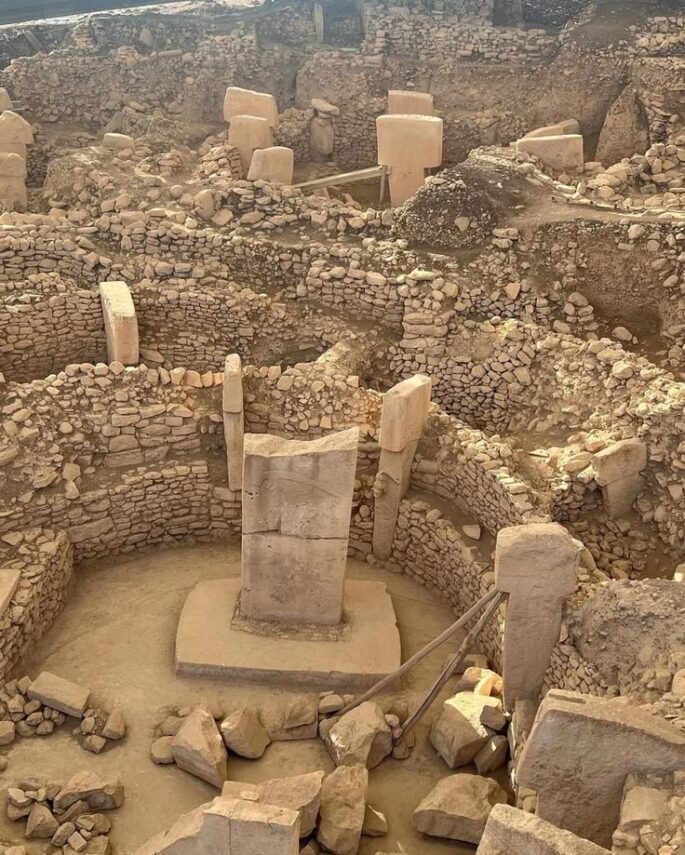
Its carved animals into stone, still speak a symbolic language that we have yet to fully uncover.
Its geometry continues to invite new discoveries.
Its purpose remains beautifully open.
Rather than diminishing its significance, these mysteries deepen it.
For Andrew Harvey, mystery is not something to be conquered.
It is something to enter.
To stand quietly among places like Göbekli Tepe is to realize that not every question demands an answer.
Some questions are invitations.
Invitations to wonder.
To humility.
To remembrance.
Perhaps that is the true gift of Göbekli Tepe.
Not that it rewrites history.
But that it reminds us history has always been, at its heart, a sacred story.
This is Part One of our three-part exploration into the mystery of Göbekli Tepe.
In Part Two, we’ll journey deeper into the extraordinary symbolism, sacred geometry, celestial alignments, and hidden teachings that many researchers including Freddy Silva believe are encoded within this remarkable sanctuary. Together, we’ll explore why sacred sites across the world were designed not simply as places to gather, but as living spaces for transformation.
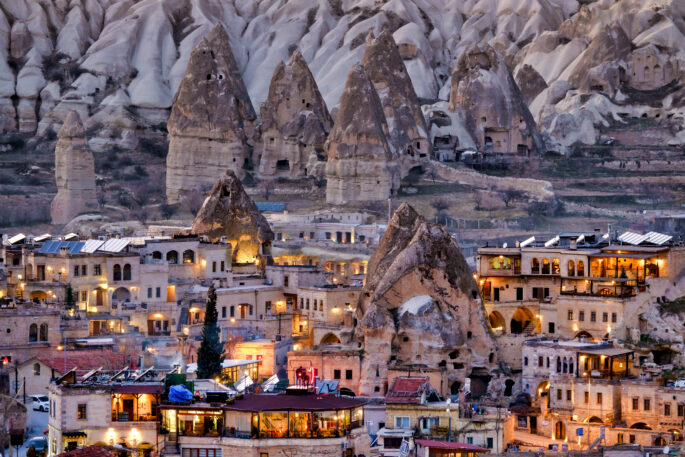
For those who feel called to experience the mystery of Göbekli Tepe firsthand, we warmly invite you to join Andrew Harvey on our upcoming Sacred Pilgrimage through Turkey December 8th-21st, 2026.
Together we’ll stand among these ancient stones, journey through the mystical landscapes of Cappadocia, contemplate the timeless beauty of Hagia Sophia, and walk the path of Rumi, exploring the living wisdom that continues to radiate through this extraordinary land.
There are journeys we take to discover the world.
And there are journeys we take to remember our place within it.
This is one of them.